Wildlife
Beginner's Guide to Identifying Common Italian Wildflowers on Spring Walks
Spring in Italy moves from the coast to the hills in weeks. A hedge that was bare in February can be yellow with primroses while snow still sits on the Apennines. For a beginner, the trick is not to memorize every name at once. Learn ten common flowers well, and the next walk becomes a conversation rather than a quiz.
Start with shape, color, and place
Before you reach for a name, look at three things. First, the shape of the flower: is it a flat star, a bell, a hood, or a cluster of tiny florets? Second, the color, but note the details—white with a yellow center, blue with a white eye, yellow with a green leaf beneath. Third, the place: woodland floor, damp ditch, lawn, roadside, or disturbed soil.
These clues do most of the work. A white star on a woodland floor in March is not the same plant as a white daisy in a mown lawn. Take a photograph of the whole plant as well as the flower, because leaves and stems often settle an identification. Avoid picking; a photo lasts longer and leaves the flower for the next walker.
Yellow flowers of hedges and lawns
Primrose (Primula vulgaris)
Pale yellow, five petals, each with a small notch at the tip. The flowers sit low among wrinkled green leaves in a basal rosette, often in shady hedgerows, woodland edges, and banks. In Italy it can begin flowering in late winter. Look for the soft, pale yellow rather than the deeper yellow of many garden primulas.
Lesser celandine (Ficaria verna)
Glossy yellow flowers with eight or more narrow petals, held above dark, heart-shaped leaves. It likes damp hedges, stream banks, and shady ground, often forming patches. The shine is distinctive: the petals catch light like buttered paper. It is not a buttercup, though it belongs to the same broad family.
Dandelion (Taraxacum officinale)
A yellow composite flower on a hollow, unbranched stem, with a ring of jagged leaves at the base. It grows in lawns, roadsides, cracks, and meadows. The seed head is familiar, but identify it first by the bare, milky stem and the toothed leaves. Many similar yellow composites exist, so check the stem and leaf before deciding.
White stars of woodland and grass
Wood anemone (Anemone nemorosa)
White, star-like flowers with six or seven petal-like segments, often tinged pink beneath. It carpets woodland floors and old hedges in spring, especially where the soil stays cool and shady. The leaves are deeply divided and whorled below the flower. A patch of nodding white stars in bare woodland is one of the season’s clearest signs.
Common daisy (Bellis perennis)
White ray florets around a yellow disc, often with pinkish tips beneath. It grows in lawns, paths, pastures, and trampled grass, flowering almost year-round in mild places. The leaves form a low rosette. It is easy to overlook because it is everywhere, but its neat, low habit and soft pink underside are reliable.
Wild strawberry (Fragaria vesca)
Five white petals around a yellow center, with trifoliate, toothed leaves and hairy stems. It prefers woodland edges, hedges, and grassy banks. The flowers appear before the small red fruit. Rub a leaf gently and you may catch a faint strawberry scent, but rely on the three-part leaf and white flower for identification.
Blue, purple, and pink flowers
Sweet violet (Viola odorata)
Deep purple flowers with five petals, the lowest one carrying a short spur behind it. The leaves are heart-shaped and often form a low clump in shady hedgerows, lawns, and woodland edges. Some violets are paler or white. The sweet scent is a bonus, not a test; look for the spur and the heart-shaped leaf.
Germander speedwell (Veronica chamaedrys)
Bright blue flowers with four petal-like lobes and two stamens sticking out like tiny pins. It creeps through grassy banks, woodland edges, and hedge bottoms, with hairy stems and toothed leaves. The blue is unusually clear for such a small flower. Speedwells can be tricky, so check the protruding stamens and the creeping habit.
Bugle (Ajuga reptans)
Blue-purple flowers packed into a short spike above glossy, oval leaves. It likes damp meadows, woodland rides, and stream banks, often spreading into patches. The flower spike is dense and upright, while the leaves are smooth and dark green, sometimes bronzed. It is a good flower for wet spring walks.
Red dead-nettle (Lamium purpureum)
Small pink-purple, hooded flowers set among nettle-like leaves on a square stem. It grows in garden edges, disturbed soil, field margins, and paths. Despite the name, it does not sting. The square stem and hooded flowers separate it from true nettles, which have different flowers and a stinging bite.
Use habitat to narrow the field
Once you know the habitat, the list of candidates shrinks quickly. Use this as a field prompt, not a rigid rule:
- Shaded woodland floor and old hedges: primrose, wood anemone, sweet violet.
- Damp ditches, stream banks, wet meadows: lesser celandine, bugle.
- Lawns, paths, trampled grass: common daisy, dandelion.
- Garden edges, disturbed soil, field margins: red dead-nettle, germander speedwell.
- Grassy banks and woodland edges: wild strawberry.
Weather matters too. Many flowers close in rain or low light, so a bright morning is better for seeing shape and color. Walk slowly, look down, and check the same hedge on several walks; the sequence of flowers will teach you more than a single outing.
Walk gently, and carry a hand lens
A small hand lens helps with tiny speedwell flowers and the backs of anemones. So does a notebook or phone note where you saw the plant, what the stem felt like, and whether the ground was wet or dry. If you are unsure, say so. Misidentifying a flower is normal; guessing confidently is not.
Do not taste wild plants, and wash your hands after handling anything. Some common wildflowers are toxic, and a few are protected. Picking is often restricted and can be illegal depending on the region and species, so check local rules before collecting anything. Leave roots and seed heads in place. The aim is to recognize the flower, enjoy the walk, and let the patch bloom again next spring.
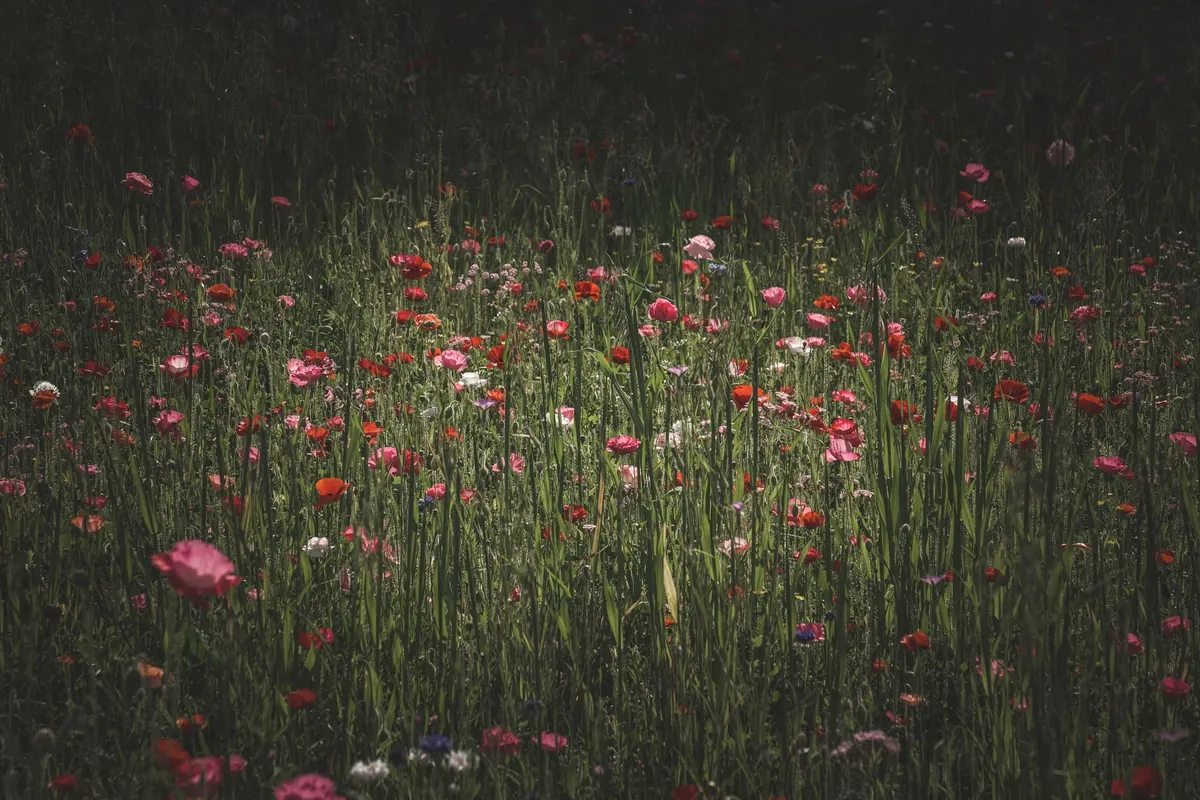
Photo: Francesco Ungaro / Pexels
Related Articles